Making the Grid Smarter
Advanced technologies that monitor the flow of electricity and respond on-demand are the future of the power grid. National Grid is incorporating two emerging technologies to improve reliability and make the grid smarter.
National Grid’s work to create a smarter, stronger energy grid through the Upstate Upgrade goes beyond transmission poles, wires and substations. New technologies are being incorporated across our transmission upgrades to make our network smarter and more resilient.
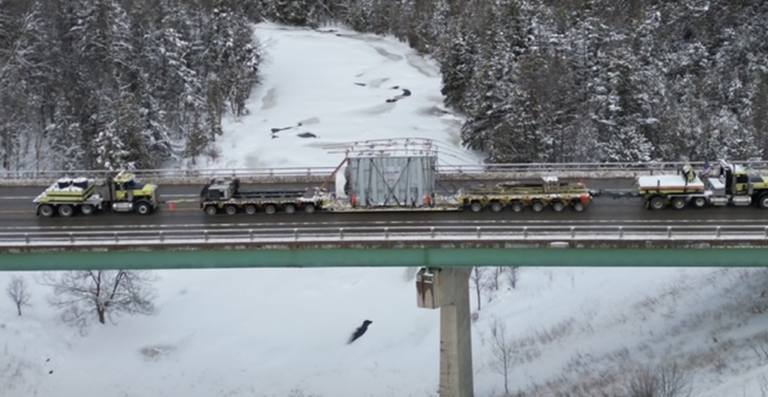
Before it was ever installed as part of upgrades at the Malone substation, our phase angle regulator had already traveled thousands of miles by boat, train and truck. Built and assembled in Belgium, the device was shipped to the United States by freighter, delivered to Massena by train, and took a slow 50-mile truck ride to its new home in Malone.
PARs help control the direction and amount of electricity flowing on power lines. Electricity naturally takes the easiest, most direct routes, so sometimes too much power flows on one line while others are underused. A phase angle regulator acts like a traffic cop for electricity. It works by slightly shifting the timing (or phase) of the electrical wave on a transmission line. That small change encourages electricity to flow where operators want it to go, instead of overloading certain lines. For us, it will help balance power flows and prevent congestion and overloads. For our customers, it will improve reliability, especially during high demand or outages.
WWNY-TV in Watertown covered the unusual sight of the PAR being delivered to Malone along local roadways.
Your car or truck is equipped with shock absorbers that insulate the vehicle and its riders from the force of hitting potholes or uneven pavement. Thanks to the Upstate Upgrade, our power grid will get something very similar.
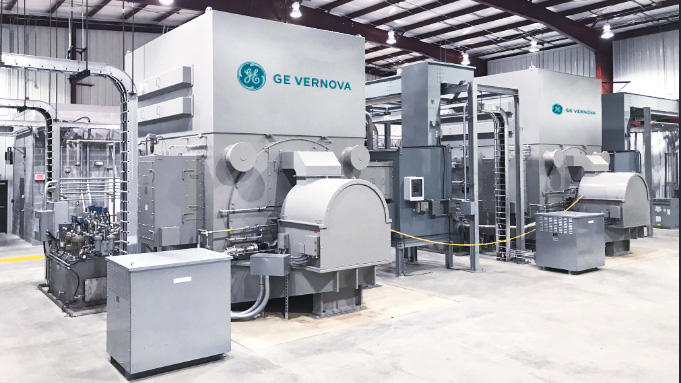
Synchronous condensers stabilize voltage and ensure the efficient flow of electricity across our lines. They provide enhanced safety, by automatically de-energizing transmission lines when they go down. These on-demand tools respond to fluctuations in power supply from renewable generation, supplementing voltage dips and absorbing spikes.
National Grid selected GE Vernova to construct the devices. The controls, technology and engineering of the condensers will be performed at the GE Grid Solutions plant in Saratoga Springs.
It’s no secret that Upstate New York’s weather can be unpredictable. Snow, sleet, freezing rain, and high winds are part of living in this region during the winter, while summertime brings with it heat, humidity and thunderstorms. These weather conditions can also diminish the capacity of high-voltage transmission lines.
Dynamic Line Rating changes the game for National Grid by making the grid more responsive. DLR systems monitor power line capacity in real time, increasing or decreasing additional electricity on the lines to ensure performance, particularly during peak demand, and helping prevent overloads and outages.
National Grid is piloting a system from LineVision in St. Lawrence County, where winter weather brings extreme temperature and wind. DLR enhances the grid by unlocking additional capacity, allowing the system to handle more load without compromising safety or reliability. Customers will see results in fewer power interruptions, greater efficiency, and more reliable energy delivery.